
Heart Rate Variability (HRV)
What is it? Why is it important? And how can you increase it?
You've probably heard of HRV. But do you know what it actually tells you — or how to use it?
Most of us were never taught how our nervous system works, let alone how to measure or strengthen its resilience. HRV training changes that. It gives you a window into how your system is functioning in real time — and practical tools to shift it when it's not working in your favor.
Heart Rate Variability is one of the most research-supported indicators of how your body is handling stress and emotional demand.
Your heart rate is just an average. A rate of 70 beats per minute doesn't mean your heart beats with perfect, even regularity. In reality there's tiny variation between each heartbeat — one interval might be 0.86 seconds, the next 0.94. HRV measures that variation.
These micro-differences aren't errors. They're signs of a healthy, responsive autonomic nervous system — the part of you that regulates heart rate, breathing, digestion, and emotional response in real time.
Higher HRV is associated with:
When your nervous system is resilient, you can handle challenges more gracefully and stay grounded under pressure. When it's not, even small stressors can feel overwhelming.
Many people focus only on “increasing HRV numbers.” Numbers tell part of the story, but the pattern of your heart rhythm matters just as much.
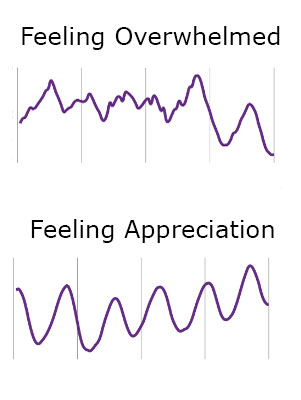
Coherence is a smooth, harmonized heart rhythm pattern — our natural state of wellbeing. Stress, fear, and overwhelm pull us out of it.
When we feel frustrated or anxious, the heart rhythm becomes chaotic and irregular. When we breathe slowly and rhythmically — paired with feelings like appreciation or calm — the pattern becomes organized and harmonious.
That harmonious pattern sends a signal to the brain that shifts your system out of fight-or-flight and toward rest and restore. In coherence, heart, brain, and nervous system move into a synchronized state. People often describe feeling calm, centered, clear, and less reactive.
The good news: coherence is trainable. Using simple body-based practices, you can teach your nervous system to return to that state more quickly and more often.
The skills to shift into coherence are practical, portable, and require no special equipment. They're body-based practices that synchronize heart, brain, breath, and emotional focus — and you can use them anywhere.
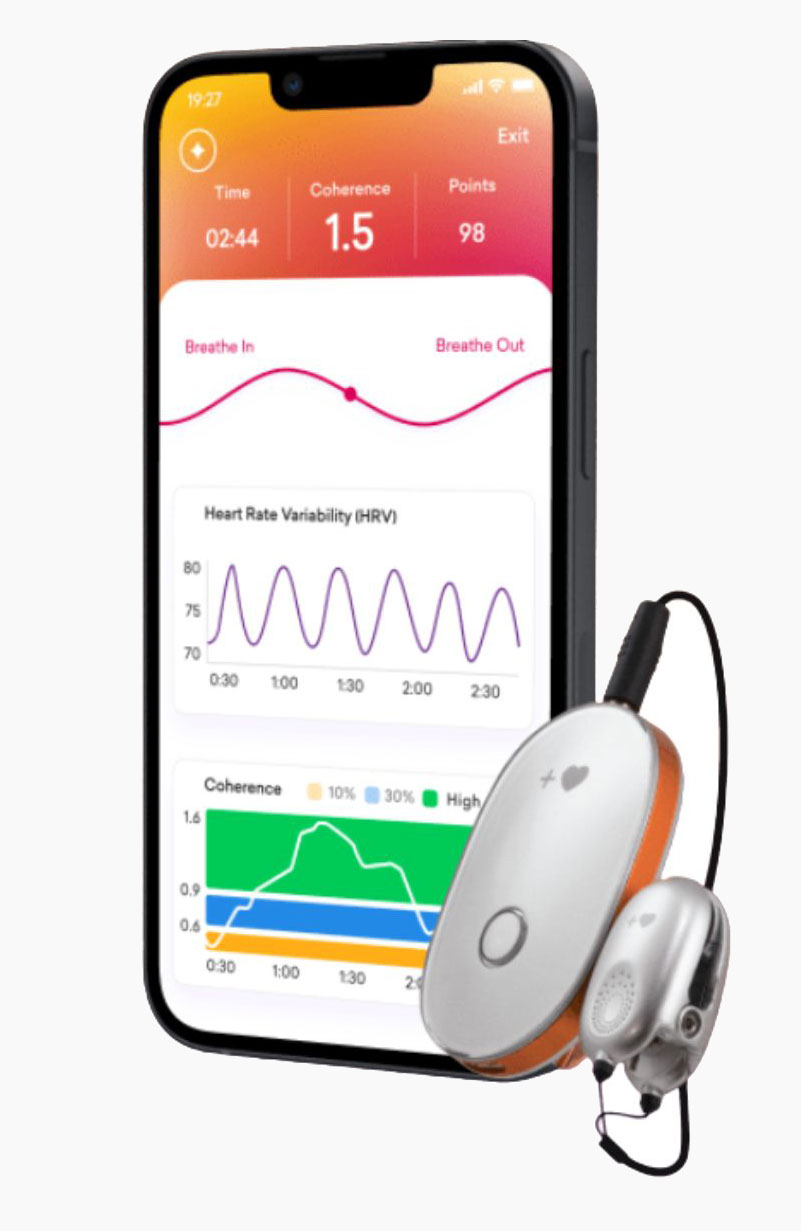
In our sessions, I start by demonstrating the technology and connecting it to what we've been working on together.
From there, depending on your goals, we build the practices into your daily life — before difficult conversations, during work stress, when you wake at 3am with your mind racing, before meals, anytime you feel overwhelmed or disconnected.
For those who want real-time data, the optional HeartMath® Inner Balance™ sensor displays your heart rhythm patterns as they shift in real time. As you adjust your breathing and emotional focus, you can watch your system move from stress toward coherence. It makes your inner experience visible — and gives you the ability to change it intentionally. If you decide to purchase a device, ordering through me gets you a 25% discount.
With consistent practice, HRV training helps you:
The goal isn't perfection. It's a more flexible nervous system — and a kinder relationship with yourself.
HRV training is a good fit if you:
As a certified Integrative Wellness Coach and HeartMath® trainer and practitioner, I combine HRV training with practical neurobiology, compassionate, grounded coaching, and support for physical, mental, emotional, and spiritual well-being
You’ll come away with a clearer understanding of your nervous system, practices you can use in everyday life, and tools to shift emotional states in real time. Plus you’ll be supported in integrating these techniques into your existing wellness, therapeutic, or spiritual practices.
HRV training is available as a standalone 4-session package for $495 — or integrated into broader coaching work for those who want to go deeper or who want to work on the patterns and habits that got you so stressed out in the first place.
Either way, you'll come away with a clear understanding of how your nervous system works, practices you can use in everyday life, and tools to shift your emotional state in real time.
Schedule a free 20-minute conversation — or visit the Work with Judy page to learn more about working with me.